

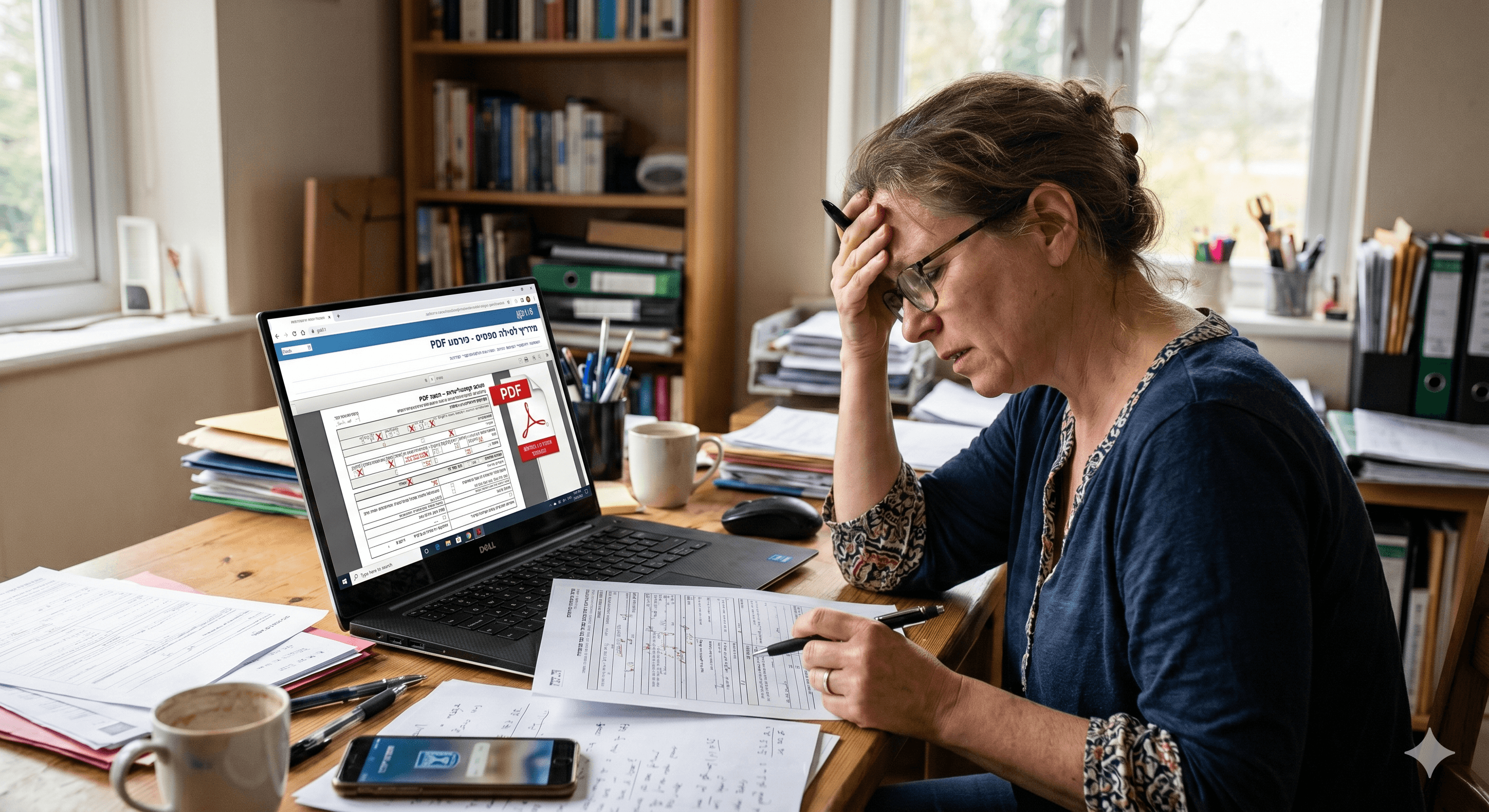
Public organizations still upload 40-page PDFs and expect citizens to find what they need.
In practice, it doesn't work – and it hasn't worked for years.
The numbers tell the story clearly:
- Over 70% of citizens access public services on mobile devices
- PDFs are not accessible to screen readers
- They are not searchable by context
- They are not adapted to multiple languages
- And there is no way to measure whether anyone actually read them
The result? Citizens bounce, call support lines, or simply give up.
PDF: A Relic from the Paper Era
The PDF format was designed in 1993 – to replicate printed documents on screen.
It was never meant to deliver service.
Yet three decades later, courts, municipalities, hospitals, museums, and government agencies still treat it as a legitimate way to communicate with citizens.
A PDF is a document, not an experience.
It carries information, but it does not guide, adapt, or respond.
In a world where people expect immediate, contextual, and accessible answers – PDF is a dead end.
The Difference Between a Document and a Service Experience
A document says: "Here is everything. Find what you need."
A service experience says: "Here is exactly what you need, right now."
The distinction matters because:
- A visitor in a courthouse needs to know which room to go to – not read a 20-page procedural guide
- A patient arriving at a hospital needs immediate directions – not a PDF floor plan
- A tourist at a museum wants context about what they're looking at – not a downloadable catalog
- A resident contacting their municipality wants a simple answer – not a regulatory document
In each case, the citizen doesn't need a document.
They need a precise, contextual answer.
Real-World Examples of PDF Failure
Courts: Visitors download procedure guides that don't tell them which floor they need today.
Municipalities: Forms are published as PDFs that can't be filled on mobile.
Museums: Exhibition guides are uploaded as files nobody opens.
Hospitals: Patient preparation instructions are hidden inside multi-page documents.
In all these cases, the information exists – but the delivery method kills accessibility.
How Touchpoints Replace PDF with Real Service
A smart Touchpoint delivers the right information at the right moment, in the right context.
Instead of a PDF:
- A QR code at a courthouse entrance shows today's schedule, relevant rooms, and real-time updates
- An NFC tag at a hospital bed provides patient-specific preparation steps in their language
- A digital touchpoint at a museum artwork shows contextual information, audio guide, and accessibility options
- A QR at a municipal office guides the citizen to the exact form they need – pre-filled and mobile-friendly
The content adapts to language, device, time, and user context – automatically.
Measurement and Analytics
With PDF, you know how many times it was downloaded.
With touchpoints, you know:
- What content citizens actually viewed
- Where they dropped off
- Which languages are most requested
- Peak usage times
- And which locations need content improvement
Data-driven decisions replace guesswork – and public service improves continuously.
WCAG Accessibility Compliance
PDF accessibility is notoriously difficult to achieve properly.
Most published PDFs fail basic WCAG standards.
Digital touchpoints, by contrast, are built for accessibility from the ground up:
- Screen reader compatible
- Proper heading hierarchy
- Adjustable text size
- High contrast support
- Multi-language with RTL support
For public organizations required by law to meet accessibility standards – this is not optional. It's essential.
The Future of Digital Public Services
Government digital transformation is not about putting old documents online.
It's about rethinking how citizens receive service.
The shift from PDF to touchpoints is not a technical upgrade.
It's a change in philosophy: from "publish and forget" to "serve and measure."
Organizations that make this shift deliver better service, reduce call center load, meet accessibility requirements, and build citizen trust.
A citizen doesn't need a document.
A citizen needs an answer.